
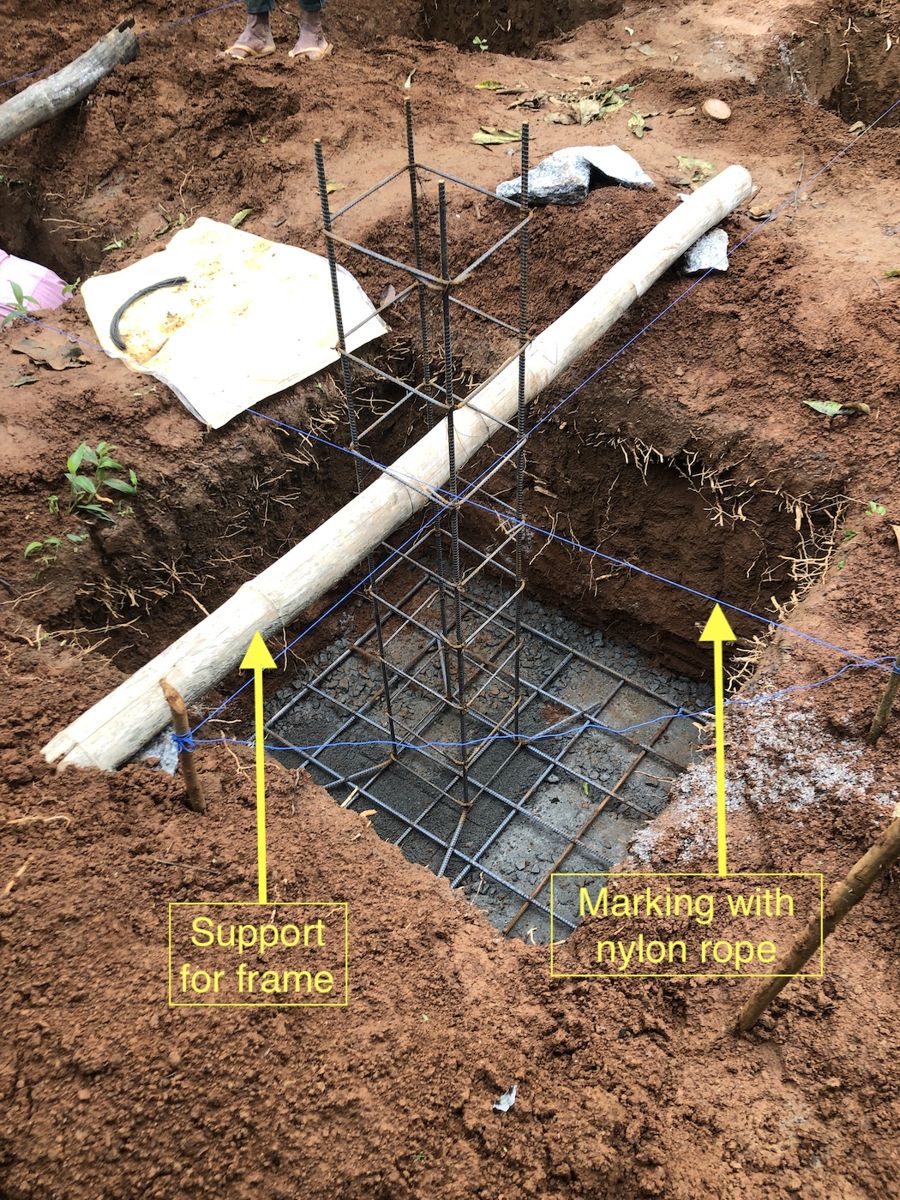
If you’re setting up a shipping container as a shop, workshop or home, getting the foundation right is critical. We used concrete pillars: a cheap foundation for shipping containers that’s strong and copes well with soft soil like ours in Coorg. Below, I reverse-engineer what the pillars actually cost, so you can budget for your own.
Choosing a labour model
When building in rural areas like Coorg, labour usually works on one of two terms:
- Contract rate. One fixed price covers labour and materials. Less effort for you, but it’s hard to tell whether you’re overpaying.
- Labour and materials. You buy the materials and pay workers per shift. More control over quality and cost, but only if you know how many shifts the work needs, and rain days can get expensive.
What I chose: I went with a contract rate. As a construction novice I didn’t want to worry about unproductive days, and a fixed price made budgeting easy. Looking back at the numbers, though, the itemised model would have saved money. The breakdown below should give you the confidence to try it. For the layout of the pillars, see what kind of foundation shipping containers need.
Materials for concrete pillars
Each pillar is 5 ft high: 2 ft above ground and 3 ft below, with a 1 ft × 1 ft section. Here’s what went into 12 of them:
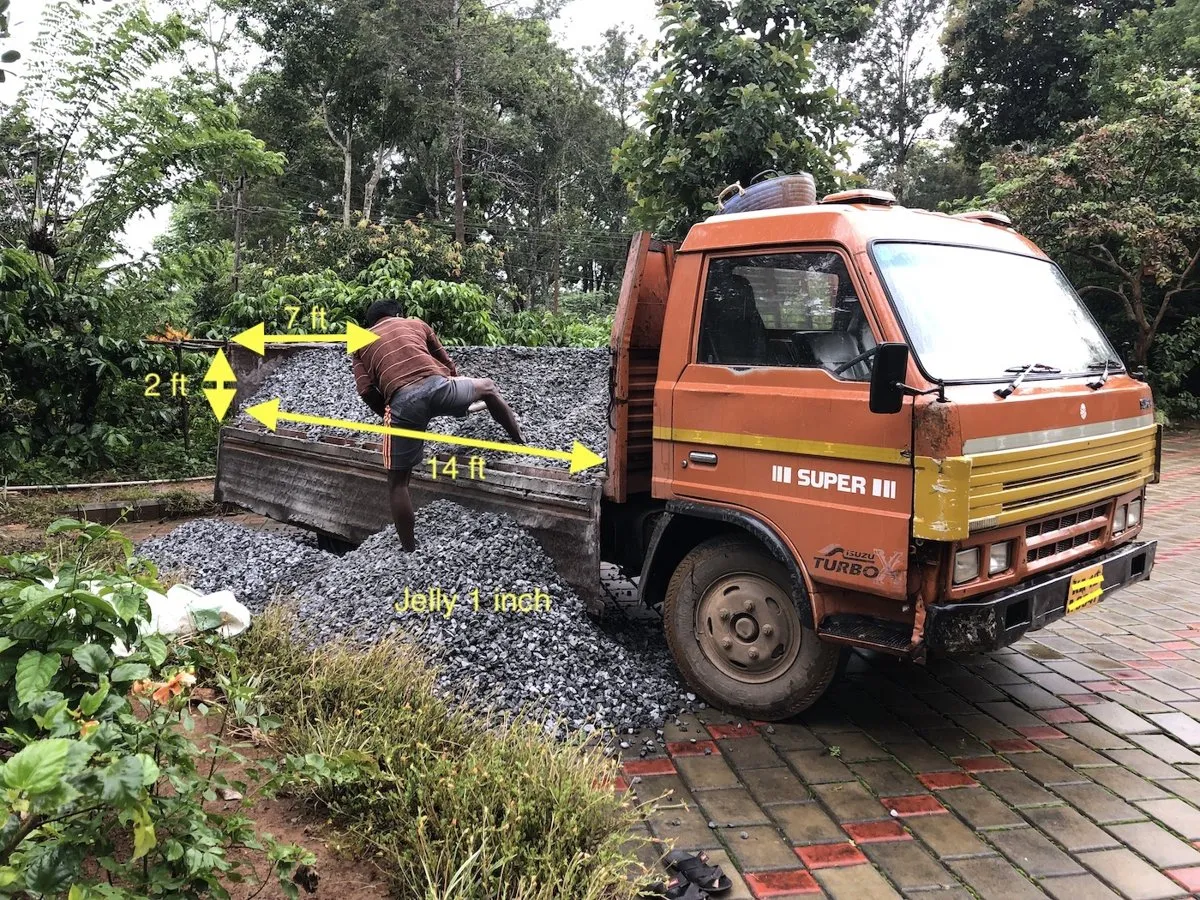
The lorry holds about 196 cft of material when filled to the height of its side walls.
| Material | Quantity | Cost |
|---|---|---|
| Cement (Rs 450/bag) | 15 bags | Rs 6,750 |
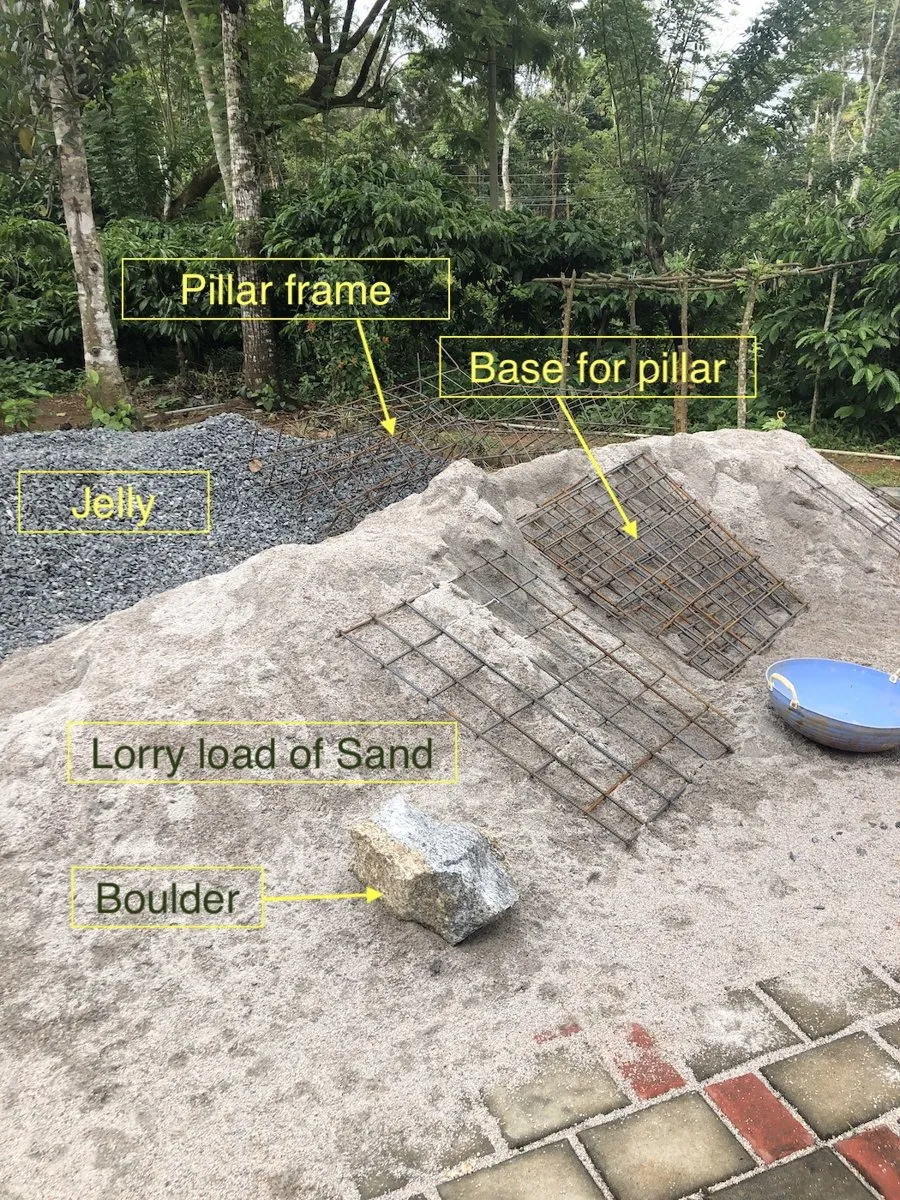
| M-sand | 1 lorry | Rs 14,500 |
| Jelly (2 inch) | 1 lorry | Rs 9,000 |
| Boulders | 1 lorry | Rs 5,500 |
| Steel rods, 10 mm (Rs 45/kg) | 245 kg | Rs 11,000 |
| Steel rods, 6 mm (Rs 48/kg) | 31 kg | Rs 1,500 |
| Total | Rs 48,250 |
A bathroom was being built at the same time, so some of this went elsewhere:
- About 10% of the cement and roughly 30% of the steel went into the bathroom’s 8 ft × 8 ft RCC roof slab.
- The pillars total 60 cft (12 × 5 ft × 1 ft × 1 ft) against 32 cft for the slab, so only about two-thirds of the jelly went into the pillars.
- The sand also covered the bathroom’s masonry.
Taking out about Rs 4,000 for the steel, and treating the leftover sand, jelly and boulders as contingency, gives Rs 44,000 for 12 pillars, or about Rs 3,700 per pillar in materials.
After the pillars are set, boulders are filled only inside the foundation, under the container’s footprint.

Labour cost per pillar
The contractor charged extra work at about Rs 1,000 per shift, where one shift is one worker for one day. Masons cost around Rs 800–1,000 a day, other workers Rs 600–800.
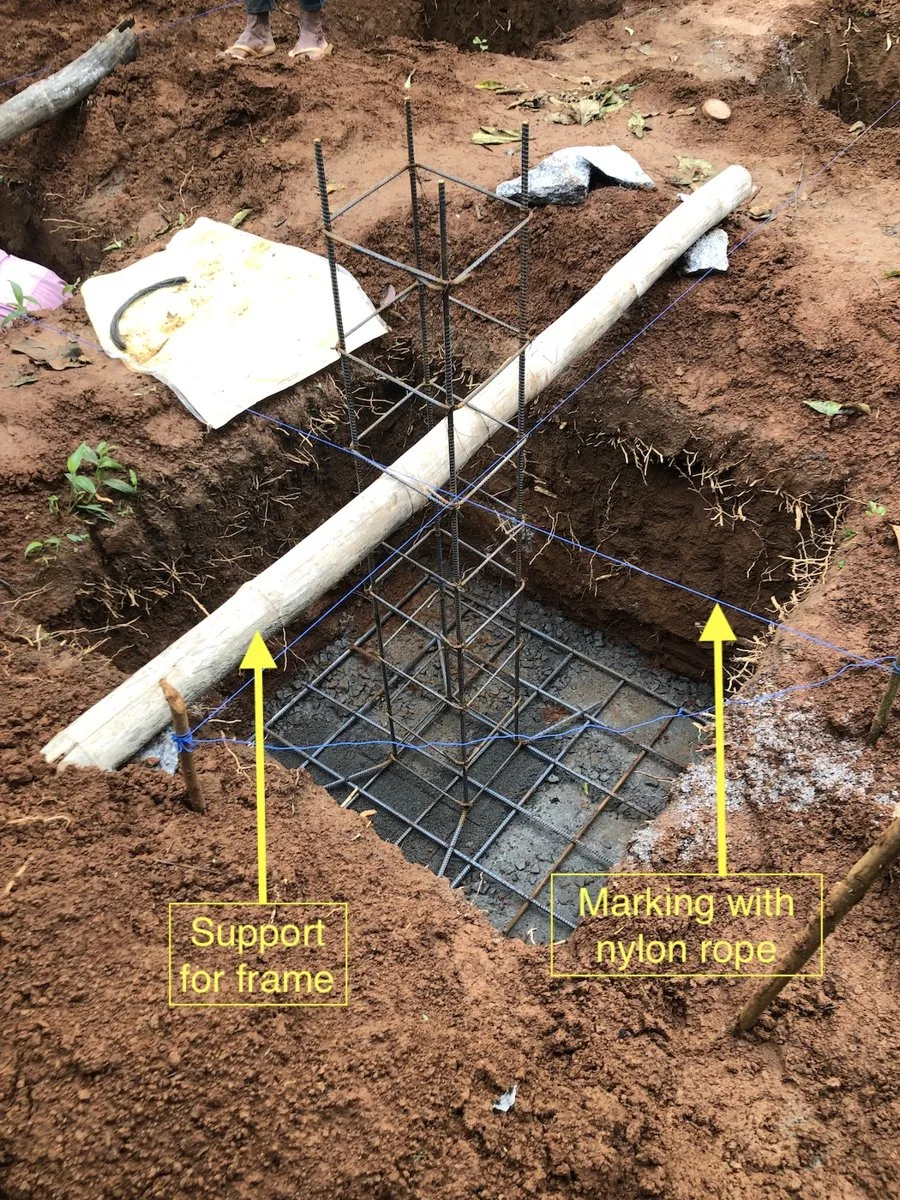
Pillar frame inside the foundation pit
| Work | Shifts | Cost |
|---|---|---|
| Digging the pillar foundations | 6 | Rs 6,000 |
| Making the steel pillar frames | 5 | Rs 5,000 |
| Pouring concrete into the casts | 7 | Rs 7,000 |
| Filling the foundation with boulders | 5 | Rs 5,000 |
| Total | Rs 23,000 |
The pillars at the “L” junction where our two containers meet are 2 ft wide to carry both, so this covers the equivalent of 10 pillars: about Rs 2,300 per pillar in labour.
Total cost per pillar
| Item | Cost per pillar |
|---|---|
| Materials | Rs 3,700 |
| Labour | Rs 2,300 |
| Total | Rs 6,000 |
A 20 ft container needs four pillars, so budget about Rs 24,000, plus 10–15% contingency for transport, rain delays and extra fittings. These are 2020 prices from Coorg, so check current rates for cement and steel.
This covers just the pillars, not the smooth cement floor under the container.
Practical lessons
- Precision matters most. The container rests only on its pillars, and an empty one weighs 2.5 tonnes. Get the levels and alignment between pillars right.
- You don’t need to overbuild. I built six pillars per container; four are enough.
- Plan the unloading spot. A Swaraj Mazda lorry full of sand weighs about 12 tonnes, and about 14 with jelly or boulders. Ours cracked and sank paver tiles, so think about where it will stand, especially in the rains.
Here’s a video of the steps in setting up the pillars:
Next in The Build: how to build the cement floor under a container.